
A Hindu wedding is more than a single ceremony. It is a celebration of love, family, tradition and the beginning of a new chapter, often filled with several days of meaningful rituals, joyful gatherings and unforgettable emotions.
From the excitement of the Baraat to the sacred rituals beneath the mandap, every part of a Hindu wedding tells a story. The most memorable photographs preserve not only the major ceremonies, but also the fleeting expressions, family connections and spontaneous moments that make each celebration unique.
At Dino Jeram Photography & Videography, we believe exceptional Hindu wedding photography combines careful preparation with the ability to recognise meaningful moments as they naturally unfold. With over 20 years of experience, our approach blends documentary storytelling with elegant portraits, capturing the beauty of your celebrations without losing sight of what matters most.
Whether you are planning a traditional Hindu wedding in London, a grand celebration at a country house in the UK or a destination wedding abroad, this guide explores the important moments to consider when planning your wedding photography.
1. The Bridal Preparations
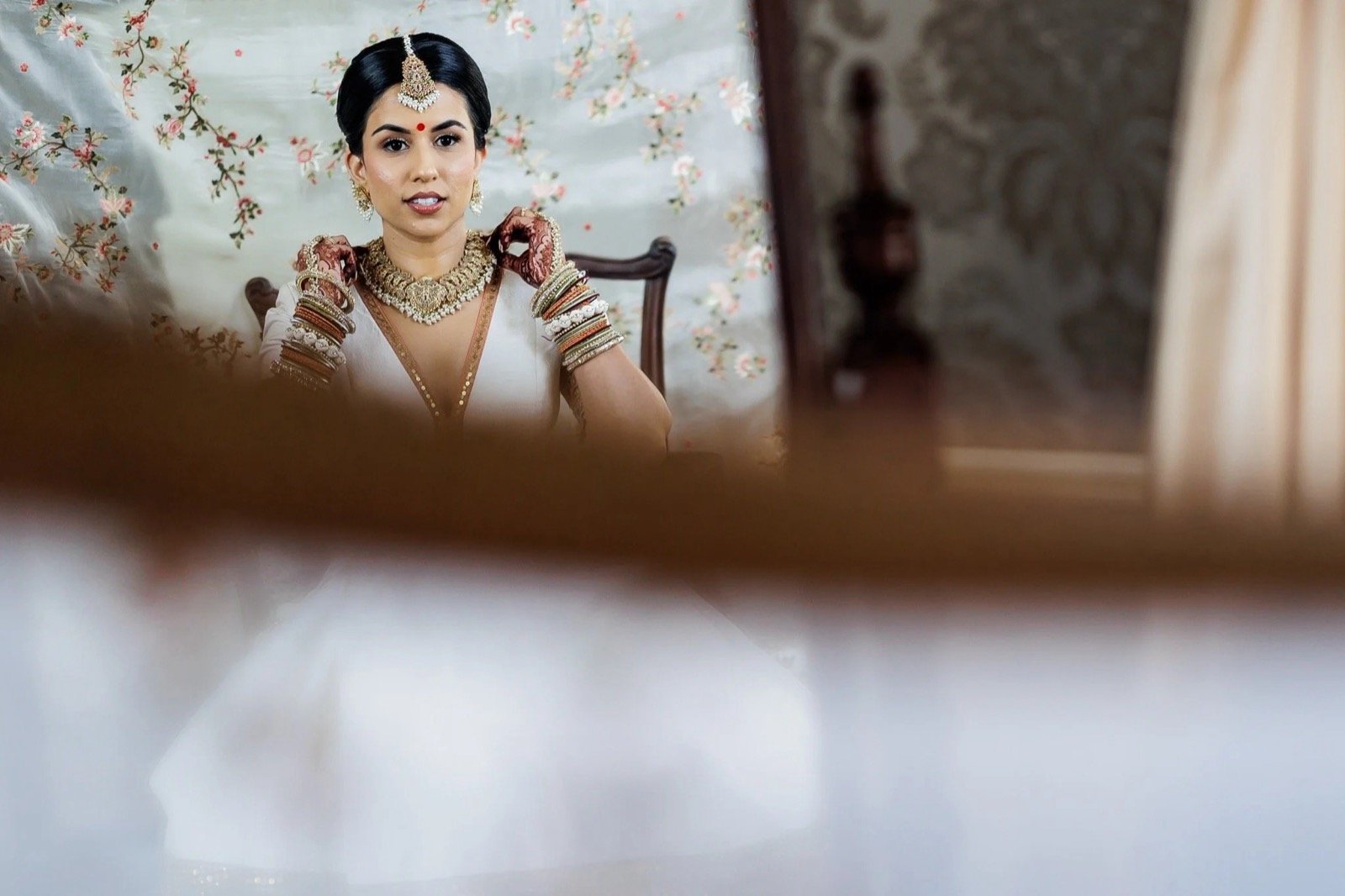
Some of the most emotional photographs happen before the ceremony even begins.
The bridal preparations are filled with anticipation, excitement and meaningful interactions with the people closest to you. These quieter moments provide a beautiful introduction to your wedding story.
Important photographs include:
The bride's wedding outfit, jewellery, shoes and accessories.
Intricate henna designs, bangles and other personal details.
Hair and makeup preparations.
The bride getting dressed with the help of family members.
A parent or sibling seeing the bride ready for the first time.
Candid moments with bridesmaids, friends and relatives.
Individual bridal portraits before leaving for the ceremony.
Natural light, thoughtful composition and an unhurried approach can help create elegant bridal portraits while allowing genuine emotions to take centre stage.
2. The Groom's Preparations and Baraat
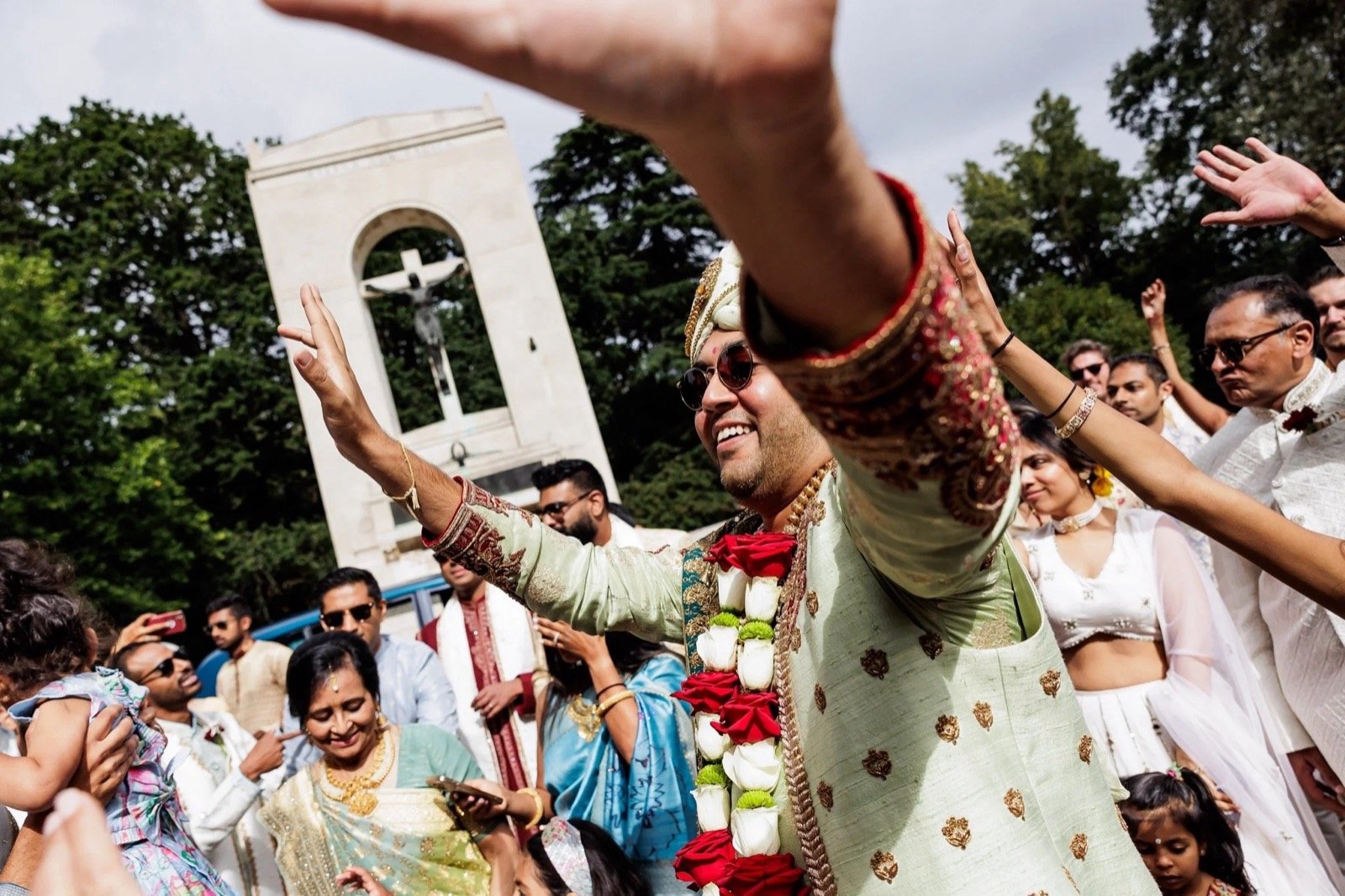
The groom's preparations offer a different atmosphere, often filled with excitement, laughter and anticipation.
Depending on the family's traditions, the Baraat may become one of the most energetic and visually striking parts of the wedding day.
Moments worth capturing include:
The groom getting ready and adjusting his wedding attire.
Details of the sherwani, safa, turban, jewellery and footwear.
Portraits with parents, siblings and close friends.
The groom arriving at the venue.
The Baraat procession, including dancing, music and celebrations.
Friends and relatives welcoming the groom's arrival.
The first interactions between the two families.
The exchange of greetings and any agreed traditional welcoming rituals.
Photographing the Baraat requires anticipation and flexibility. The atmosphere can change quickly, so it is important to capture both the wider celebration and the individual expressions within the crowd.
3. The Bride's Arrival
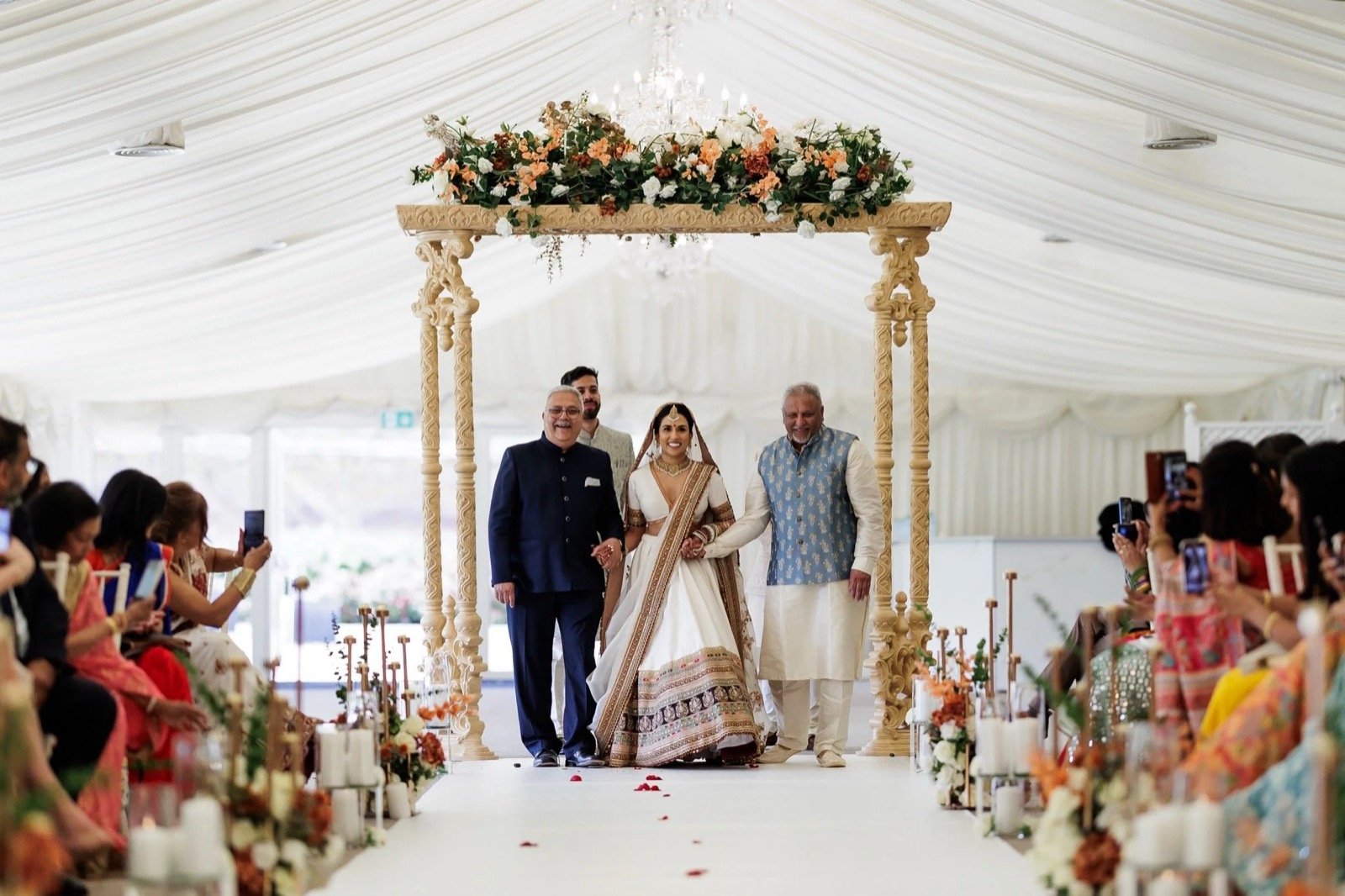
The bride's arrival is often one of the most anticipated moments of a Hindu wedding.
Whether she enters accompanied by family members, beneath a phoolon ki chadar, or through another meaningful family tradition, her entrance deserves careful attention.
A thoughtful photography plan can include:
A full-length photograph of the bride entering.
Details of the bridal outfit, veil and flowers.
The reactions of the groom and waiting guests.
Parents and siblings watching the bride's entrance.
Candid moments between the bride and her family.
A wide photograph showing the ceremony setting and gathering.
The goal is to tell the complete story of the entrance, not simply to photograph the bride walking towards the mandap.
4. The Mandap and Wedding Décor
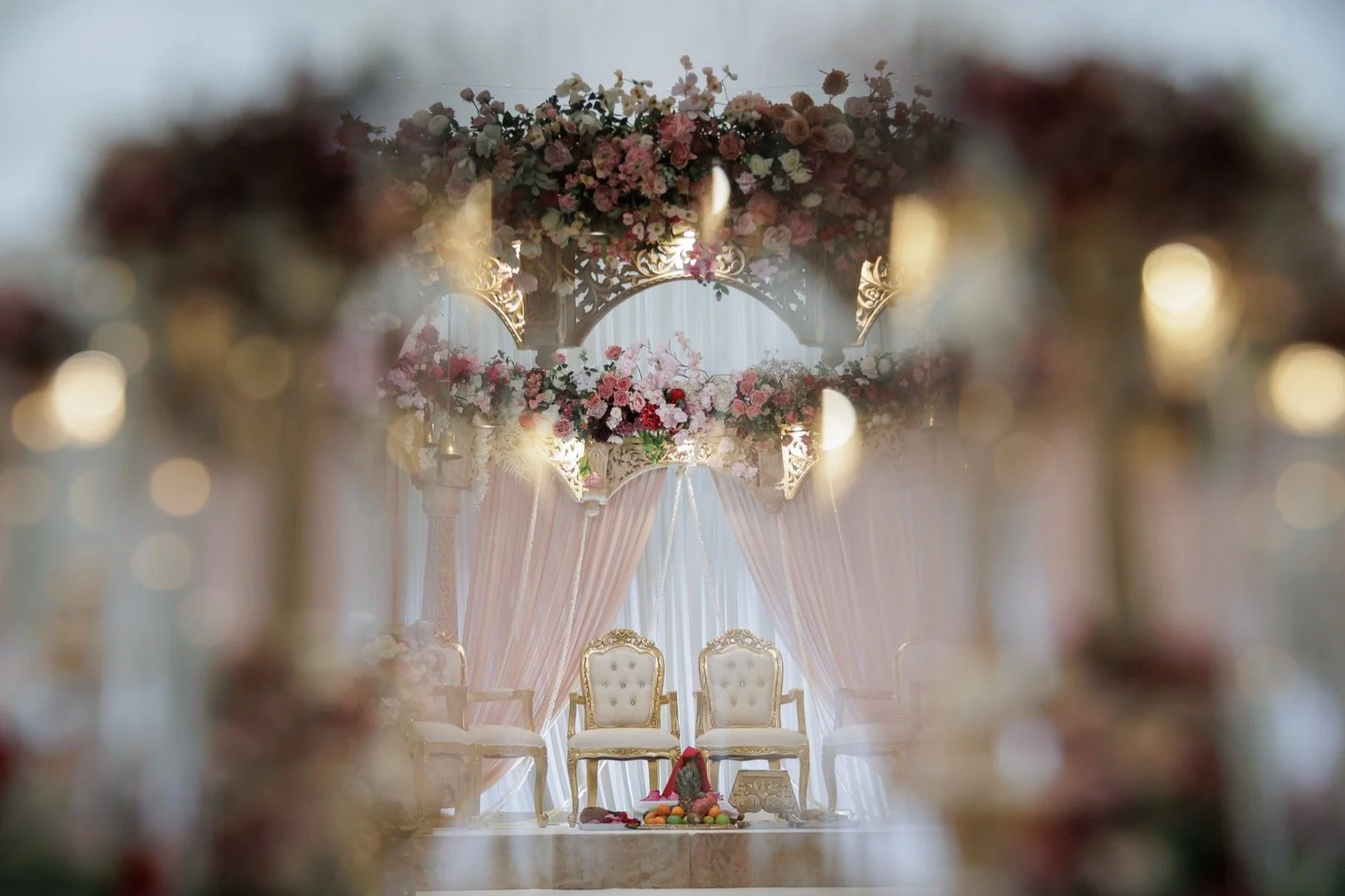
The mandap is the visual and ceremonial centrepiece of many Hindu weddings. Its flowers, fabrics, colours and decorative details help establish the atmosphere of the ceremony.
Before guests fill the space, your photographer should have an opportunity to document the setting.
Consider capturing:
Wide photographs of the complete mandap.
Floral arrangements, hanging installations and decorative details.
The sacred fire arrangement, where applicable.
The seating and ceremony layout.
The couple's seating beneath the mandap.
The wider venue, guests and overall atmosphere.
Personalised details that reflect the couple and their families.
These photographs provide context for the ceremony and help preserve the effort that went into designing the celebration.
5. The Jai Mala or Varmala Ceremony
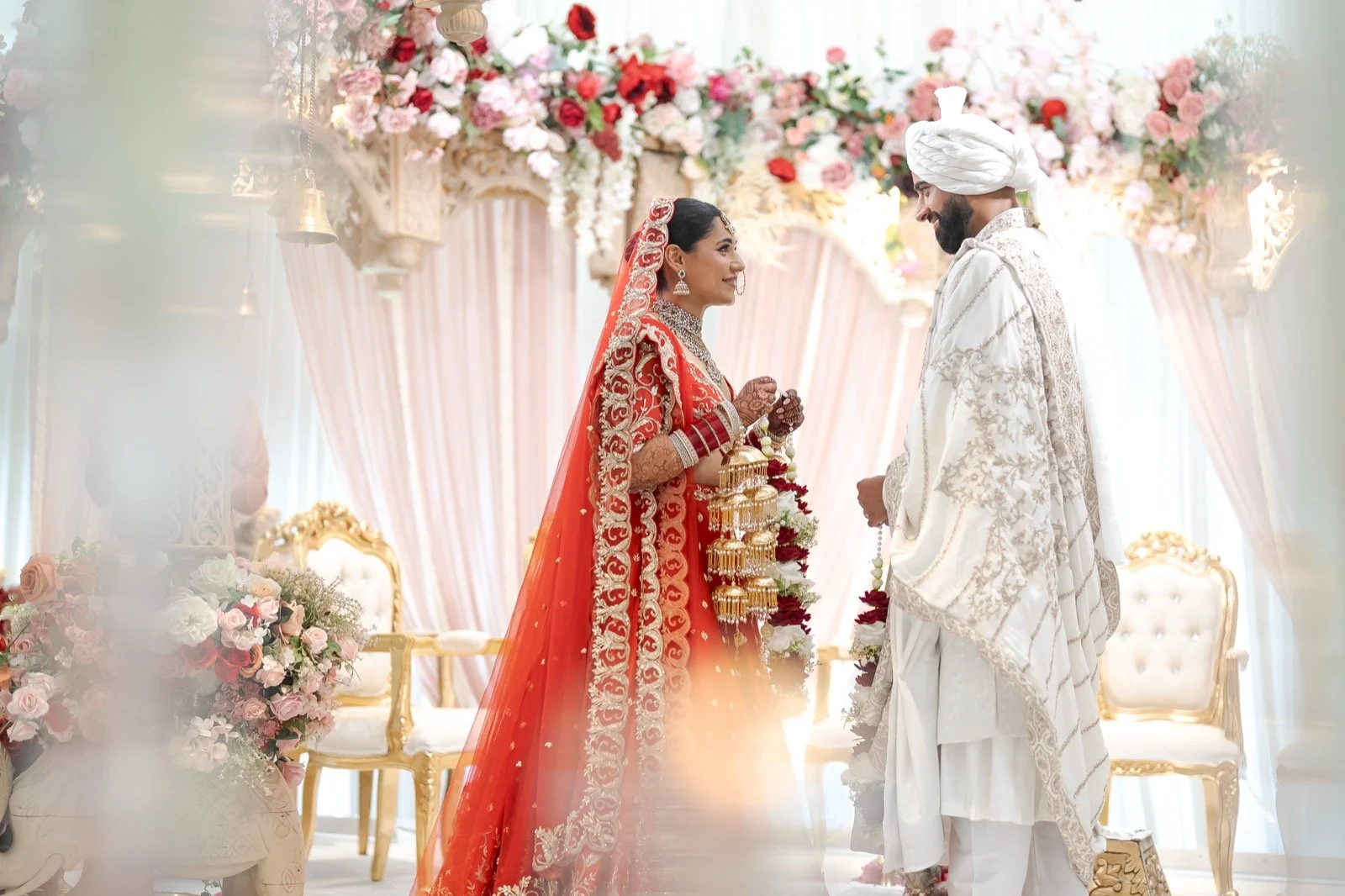
The exchange of garlands, commonly known as Jai Mala or Varmala, is often a particularly expressive moment during an Indian wedding.
It can involve laughter, playful interactions, cheering guests and beautiful portraits of the couple together.
Important photographs include:
The couple holding their garlands.
Their first interaction during the exchange.
The moment each partner places a garland around the other's neck.
Genuine smiles and reactions.
Family members and friends celebrating.
A portrait of the couple together immediately afterwards.
Because the exchange can happen quickly, an experienced photographer will anticipate the action and position themselves to capture the key expressions without disrupting the ceremony.
6. The Sacred Rituals Beneath the Mandap
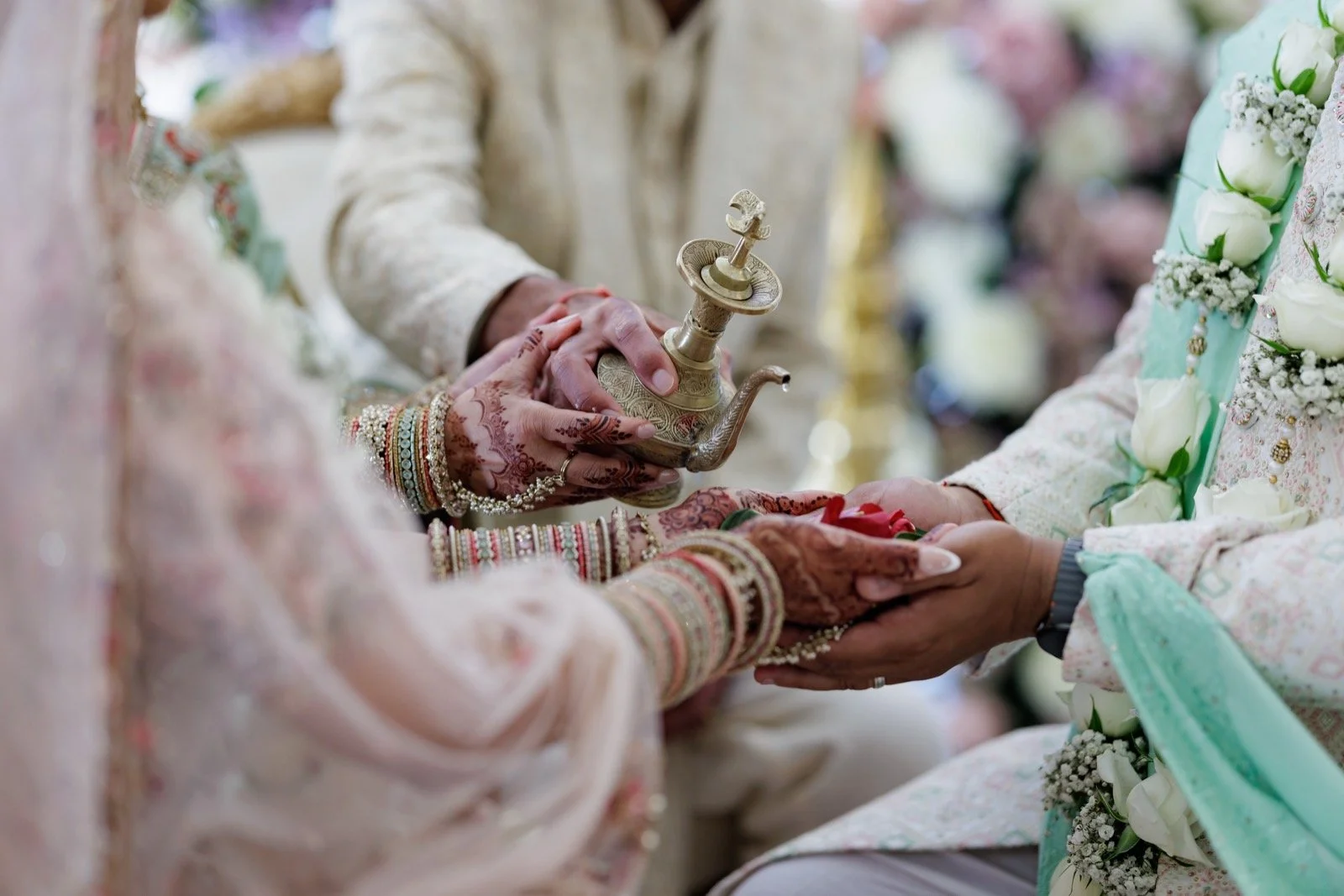
The central wedding ceremony is at the heart of many Hindu weddings. Its rituals may vary according to regional traditions, family customs and religious practices.
Discussing the ceremony with your photographer beforehand helps ensure that the important moments are understood and documented respectfully.
Depending on your ceremony, key moments may include:
Kanyadaan
Where this ritual is observed, photographs may include the bride's parents participating in the ceremony, the couple's expressions and the involvement of family members.
Hasta Melap or the Joining of Hands
In traditions where this takes place, the joining of the couple's hands can make a meaningful photograph, particularly when framed to include relevant ceremonial details.
Mangal Pheras or Agni Pradakshina

Where the couple circles the sacred fire as part of their tradition, photographs can document the movement, the ceremony's wider setting and the expressions of those participating.
Saptapadi — The Seven Steps
Where the seven steps form part of the ceremony, your photographer can capture the couple taking part in this important ritual, together with relevant details and family reactions.
Sindoor and Mangalsutra
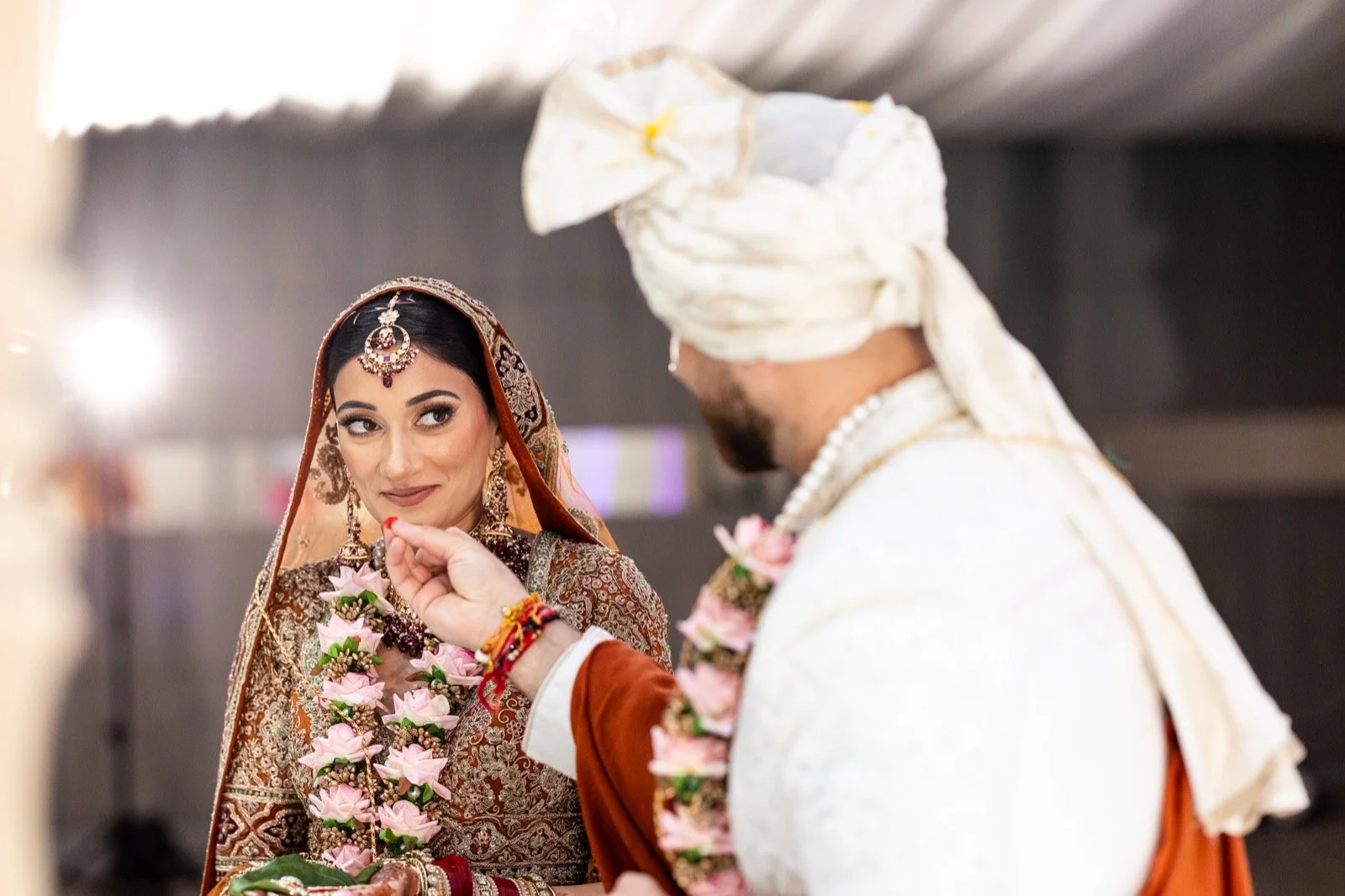
In traditions where these rituals are observed, close-up photographs can preserve the gestures, the couple's expressions and the significance of the moment to their families.
Not every Hindu wedding follows the same sequence or includes every ritual listed above. Your photographer should work from your actual ceremony schedule and family customs rather than assume that every wedding is identical.
7. The Emotional Moments Between Rituals
Some of the most treasured wedding photographs are not associated with a particular ritual at all.
A parent's expression, a reassuring glance between the couple or a grandparent watching the ceremony can become one of the most meaningful images in the final collection.
Look for moments such as:
Parents watching their children during the ceremony.
Grandparents sharing a quiet smile.
Siblings exchanging a look or a laugh.
The couple reassuring one another.
Friends reacting to an important moment.
Guests joining their hands in prayer or watching respectfully.
Spontaneous hugs, laughter and happy tears.
Documentary wedding photography is especially valuable here because these interactions cannot always be planned or repeated.
8. Family Portraits and Group Photographs
Hindu weddings often bring together several generations and extended families. Formal photographs provide a lasting record of the people who shared your wedding day.
A little organisation can make this part of the day much more enjoyable.
Consider preparing a list that includes:
The couple with both sets of parents.
The couple with siblings and their partners.
Individual photographs with each set of parents.
The couple with grandparents.
Immediate family group photographs.
Extended family photographs from both sides.
The couple with close friends and wedding-party members.
Special photographs with relatives who have travelled a long distance.
Nominate a family member from each side who can help gather people when needed. This is particularly useful at large weddings, where guests may be spread across several areas of the venue.
Allow enough time for these photographs without making the couple miss too much of their own celebration.
9. Couple Portraits After the Ceremony
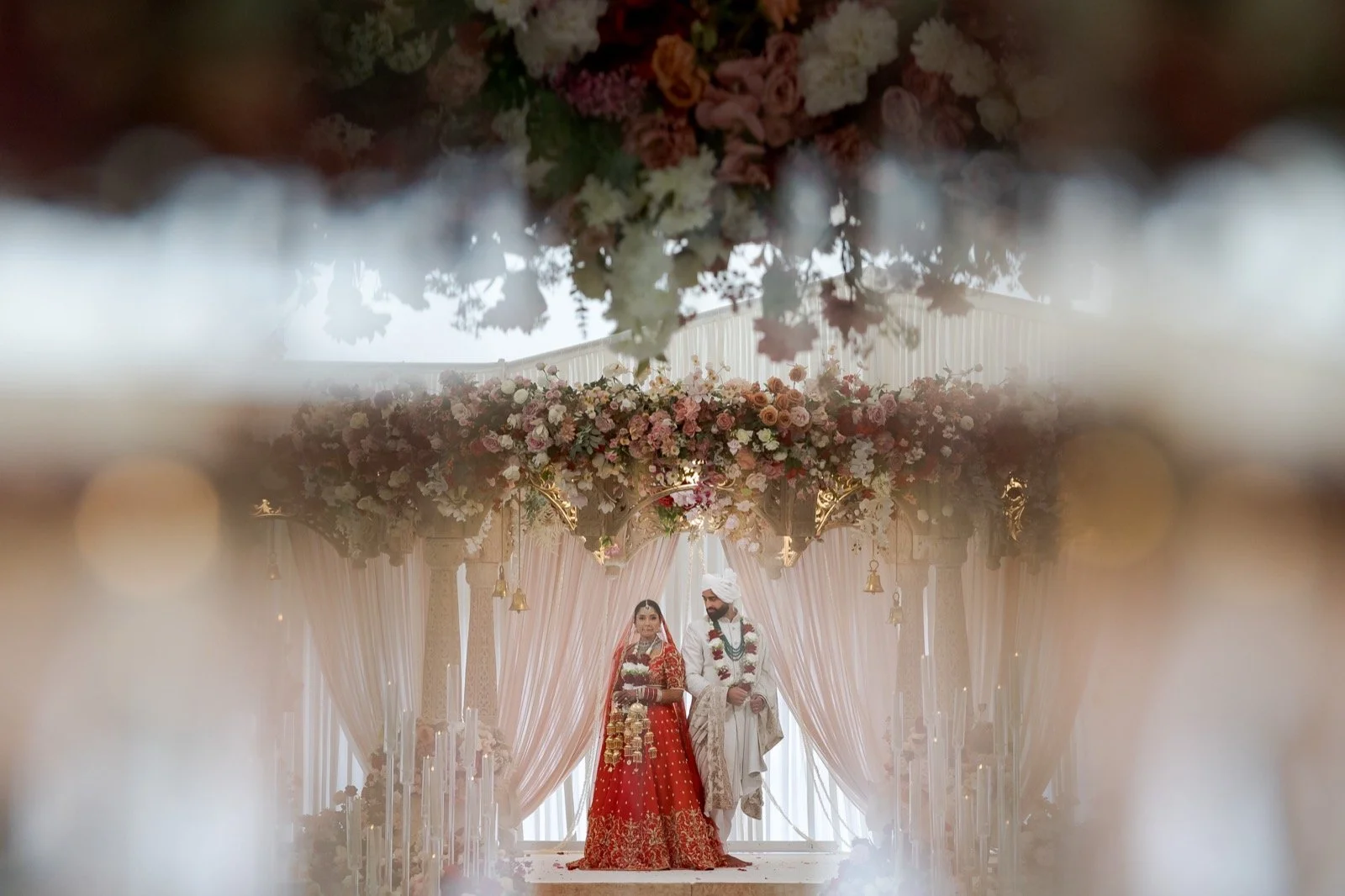
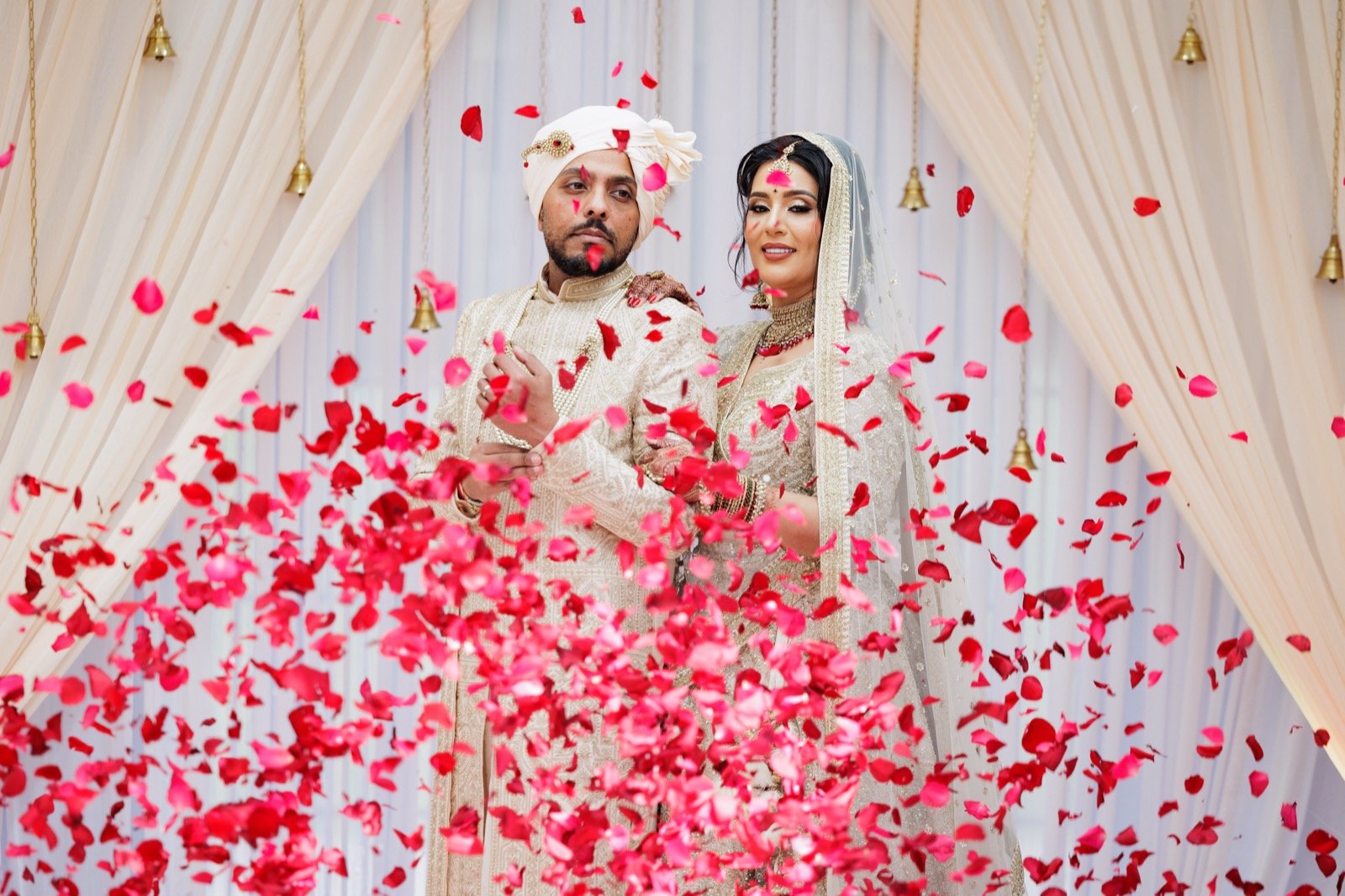
Couple portraits create an opportunity to slow down briefly and enjoy a moment together.
The best portraits should feel connected to the couple's personalities and the atmosphere of the day, rather than becoming an unnecessarily long photoshoot.
Useful opportunities include:
Elegant portraits in the wedding attire.
Natural photographs of the couple walking together.
Romantic portraits in the venue's gardens or architectural surroundings.
Close-up photographs that highlight expressions and details.
Wide compositions showing the scale and beauty of the venue.
Creative portraits using the mandap, floral installations or evening lighting.
For UK weddings, it is worth identifying a few portrait locations in advance in case the weather changes. A flexible plan means beautiful photographs remain possible even if it rains.
10. The Vidaai or Bidai

For families whose traditions include Vidaai or Bidai, this farewell can be one of the most emotional parts of the wedding.
It may represent a significant transition for the bride and her family, making sensitivity particularly important.
Photographs may include:
The bride sharing a final embrace with her parents.
Siblings and close relatives offering their wishes.
Quiet expressions and spontaneous tears.
Family members supporting one another.
The couple leaving together, where appropriate.
These moments should be photographed discreetly. Giving family members space to experience the farewell is more important than directing the scene for the camera.
How to Plan Your Hindu Wedding Photography Timeline
A well-planned timeline allows your photographer to anticipate important moments without making the day feel rushed.
Every wedding is different, so use the following as a planning framework rather than a fixed schedule.
Before the wedding
Share the ceremony schedule and venue details.
Discuss the rituals that are particularly important to your family.
Prepare a list of essential family group photographs.
Identify any restrictions on photography during the ceremony.
Agree on arrangements for multiple venues or events.
During the wedding day
Allow time for bridal and groom preparations.
Plan coverage for the Baraat and the bride's arrival, where applicable.
Make sure your photographer knows the expected sequence of the mandap rituals.
Reserve time for family portraits and couple photographs.
Coordinate reception coverage and any important evening events.
After the wedding
Confirm the expected delivery arrangements for your photographs.
Decide whether you would like a printed wedding album.
Discuss whether photography and videography will be provided together.
If your wedding spans several days, consider a coverage plan that connects the different celebrations into one complete story.
Choosing a Hindu Wedding Photographer in the UK
Hindu wedding photography requires more than technical ability. Your photographer should understand the flow of the celebrations, respect the significance of the rituals and be prepared for the fast-moving nature of a large wedding.
When comparing photographers, consider asking:
Have you photographed Hindu weddings with a ceremony similar to ours?
Can we see a complete wedding gallery rather than only selected highlights?
How do you prepare for the important rituals?
Can you cover multiple events or venues?
How do you organise large family group photographs?
What happens if the ceremony runs late?
Do you offer photography and videography together?
What is included in your coverage and final delivery?
Look for a photographer whose work combines the images you love with the experience and professionalism needed to document the day confidently.
At Dino Jeram Photography & Videography, our approach combines candid storytelling, considered portraits and an understanding of the moments that make Hindu weddings distinctive. We work with couples across London, throughout the UK and internationally, tailoring coverage to their celebrations and traditions.
Frequently Asked Questions About Hindu Wedding Photography
What are the most important moments to capture at a Hindu wedding?
Important moments may include the bridal preparations, Baraat, bride's arrival, Jai Mala or Varmala, key mandap rituals, family portraits, couple portraits, Vidaai where observed, and the reception. The exact priorities depend on your family's traditions and ceremony schedule.
How many hours of photography do you need for a Hindu wedding?
The required coverage depends on when preparations begin, the timing of the ceremony, the number of venues and the length of the reception. Some weddings can be covered in a single day, while others benefit from coverage across several events or days. Discuss your full schedule with your photographer before choosing a package.
Should we provide our photographer with a list of Hindu wedding rituals?
Yes. A ceremony schedule and a list of particularly important rituals can be extremely helpful. Traditions vary between families and communities, so your photographer should understand which moments matter most to you.
How can we make sure important family photographs are not missed?
Prepare a short list of essential group combinations and nominate relatives who can help gather family members. Allow sufficient time for the photographs and share any particularly important family considerations with your photographer in advance.
Can Hindu wedding photography include both candid and posed photographs?
Absolutely. A well-rounded gallery can combine natural, documentary-style moments with elegant couple portraits, family group photographs and carefully composed images of the ceremony and venue.
Do you photograph Hindu weddings outside London?
Dino Jeram Photography & Videography works across London, throughout the UK and internationally. Coverage can be discussed for weddings at country houses, hotels, dedicated wedding venues and destination locations.
Capture Every Meaningful Moment of Your Hindu Wedding
Your wedding photographs should preserve more than the appearance of the day. They should bring back the excitement of the preparations, the significance of the ceremony, the expressions of the people you love and the atmosphere of the celebrations.
With thoughtful preparation and an experienced approach, the result can be a collection of photographs that feels personal, elegant and true to your story.
If you are planning a Hindu wedding in London, elsewhere in the UK or abroad, Dino Jeram Photography & Videography would love to hear about your plans.
Explore our Hindu Wedding Photography portfolio or get in touch to discuss your wedding date, venue and photography requirements.
